
TEL:4000-0000-00
http://enguizhoutrip.souxw.com
Jiliang: Trailing the Silk Road's Whispers[FAST China Sky Eye + Libo's Little Seven-Arch Bridge + Xijiang's Thousand-Household Miao Village + Zhenyuan Ancient Town + Fanjingshan Mountain + Shiqian Hot Springs + Colorful Guizhou City | 8 Days, 7 Nights, Pa
- Route URL:http://enguizhoutrip.souxw.com/lines/show_55.html
- Start City:
- Days:8Day
- Round trip transportation:飞机,大巴
scheduling
Kuala Lumpur-Guiyang
- Dining situation:
- Breakfast:No Lunch:No Supper:Yes
- Accommodation:
- Guizhou Hotel
- vehicle:
- Plane Bus
Upon arrival at Guiyang Longdongbao International Airport (a designated 240-hour transit visa-free entry port), a bilingual guide will greet you, holding a "Ji Liang" totem-adorned sign. The "Night of Ji Liang" welcome banquet will be hosted at the International Conference Center or VIP Wing of Guizhou Hotel, featuring intangible cultural heritage performances such as the Miao Lusheng Dance and Dong Grand Chorus.
Guiyang-Pingtang
- Dining situation:
- Breakfast:Yes Lunch:Yes Supper:Yes
- vehicle:
- Bus
Morning · Transcending Mountains and Seas, Seeking the Firmament
Step into the Astronomical Experience Hall, where the epic journey of humanity's quest for the cosmos unfolds—from the primordial chaos to the completion of the "China Sky Eye." Much like the mythical steed Jiliang that traversed mountains and seas, the spirit of exploration resonates with the boundless starry sky, gently sowing seeds of star-chasing dreams in the heart.
Afternoon · A Steed Bearing Dreams, Gazing at the Starry Sky
Standing on the Sky Eye observation deck, the mountains undulate like waves, and the colossal eye gazes heavenward. A specially designed "Jiliang · Stargazing" photo spot captures the essence of the mythical horse soaring with dreams into the infinite universe. Each upward glance is a soulful encounter with stars billions of light-years away.
Night · Silent Contemplation, Wandering the Cosmic Void
Check into the Silent Zone Astronomy Town, switch off your phone, and let go of the clamor. Peer through a professional telescope at starlight that has traveled billions of light-years. The silence of the night in the quiet zone purifies your thoughts, allowing you to find inner clarity and tranquility amidst the vast river of stars.
[China Sky Eye]
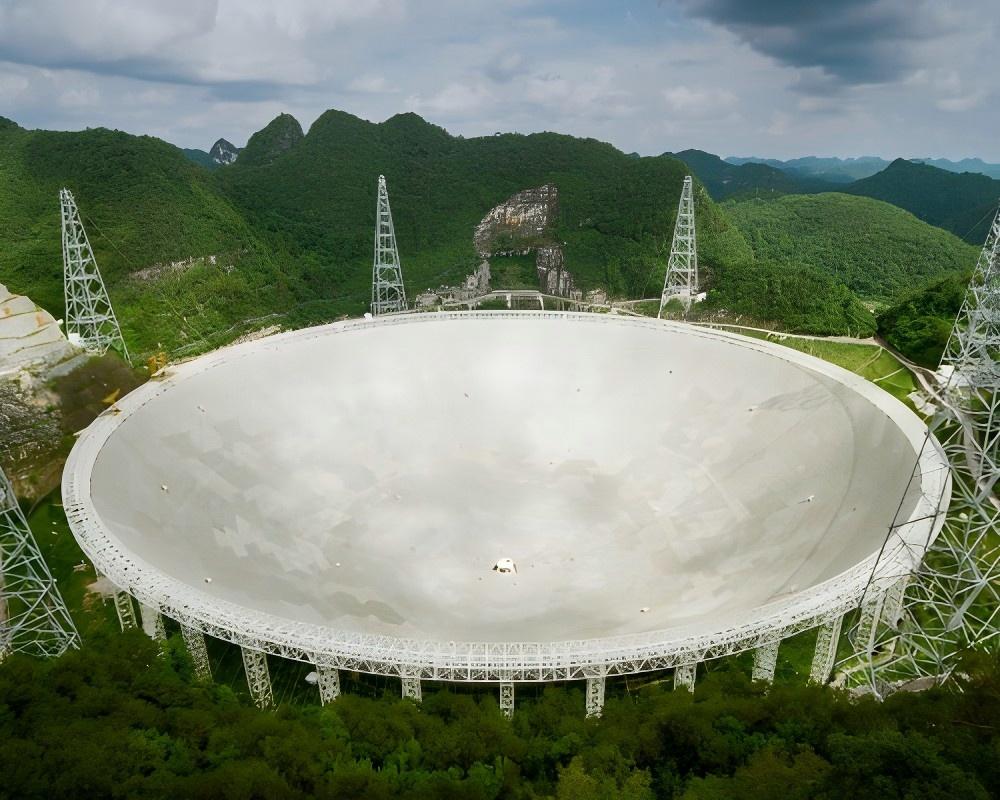
Situated in Kedu Town, Pingtang County, Guizhou, the "China Sky Eye" is built around the world's largest and most sensitive 500-meter aperture spherical radio telescope (FAST). Harnessing a natural karst depression as its base, this national treasure has detected over a thousand pulsars, standing as a brilliant eye for humanity's exploration of the universe. The scenic area comprises the Astronomy Town and the observation deck. Visitors can delve into cosmic evolution in the astronomical experience hall, behold the true grandeur of the Sky Eye nestled among mountains from the observation deck, and gaze at the stars in the silent zone to feel the vastness of the firmament. It serves not only as a science classroom but also as a spiritual sanctuary honoring "Father of the Sky Eye" Nan Rendong, where science and dreams converge.
Pingtang-Libo
- Dining situation:
- Breakfast:Yes Lunch:Yes Supper:Yes
- Accommodation:
- Libo Guizhou Hotel Selection
- vehicle:
- Bus
Afternoon: Divine Steeds Skimming the Water, Jade Waves Etching Their Mark
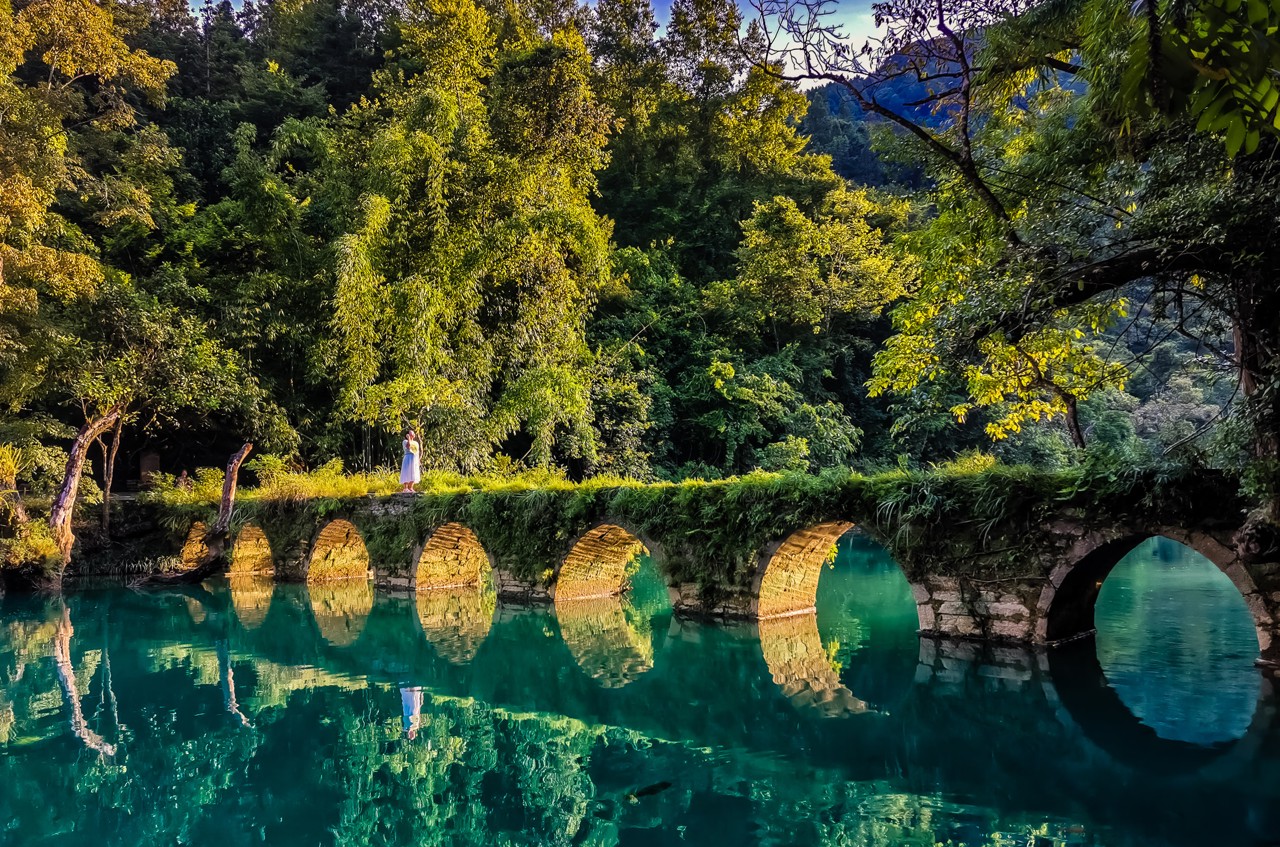
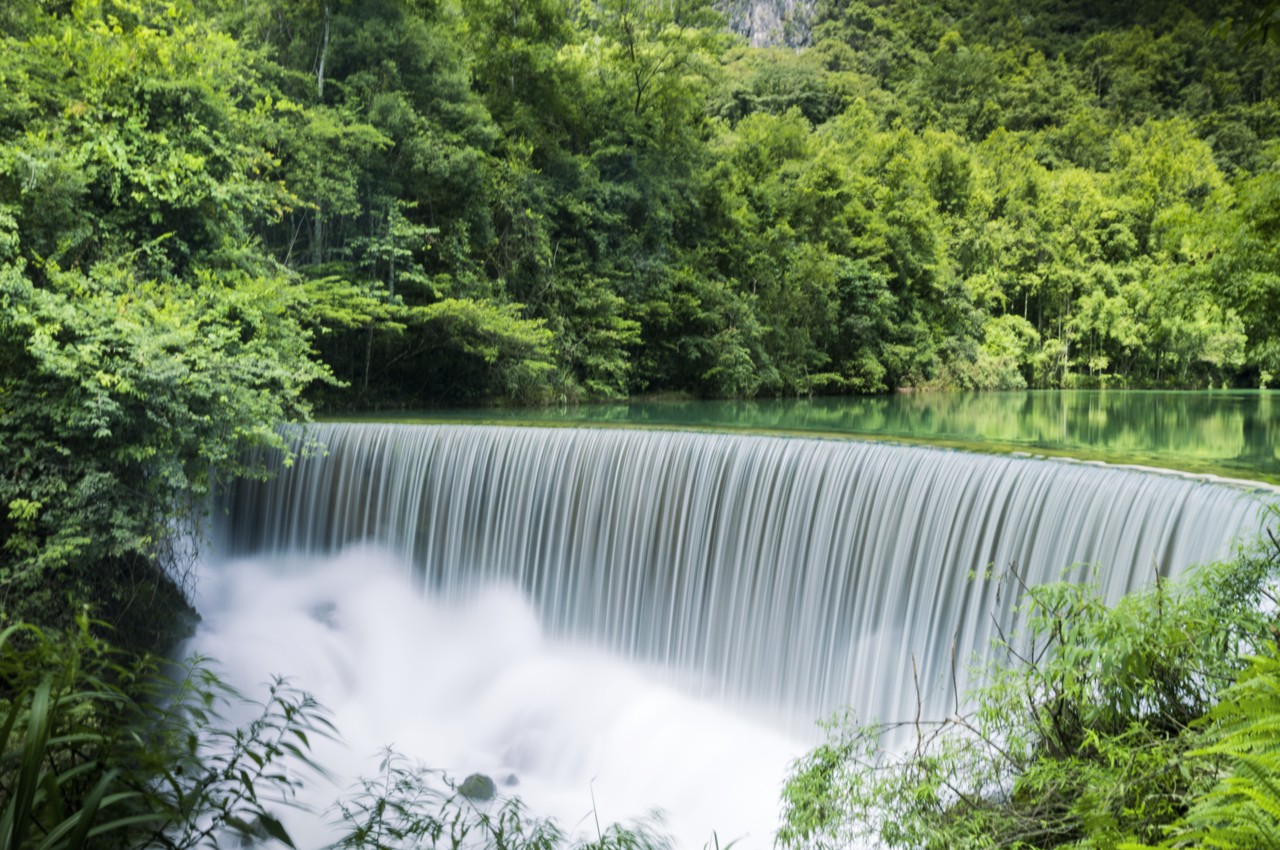
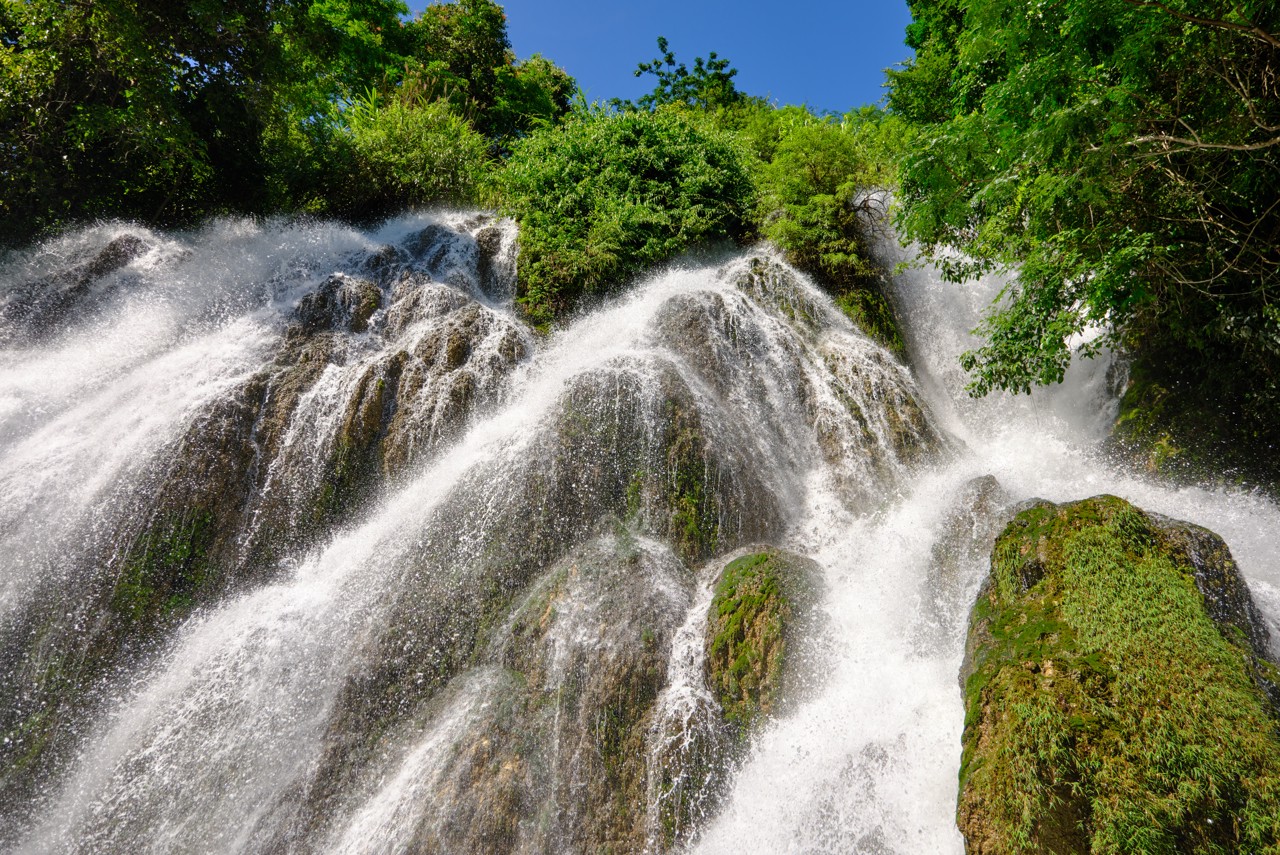
Stepping into Xiaoqikong feels like descending into a verdant fairyland. The 68-tier cascading waterfalls tumble in layers, their splashing spray scattering like shattered jade, while the tranquil pools lie deep and emerald. On the specially designed "Ji Liang Water-Treading" viewing platform, models clad in ethnic attire stand poised above the ripples. With the graceful flutter of their garments, they bring to life the soaring posture of the divine steed. A soft click of the shutter immortalizes both myth and the essence of the landscape—though the steed treads without a trace, it leaves an unforgettable impression here.
Night: Weaving Dreams with Light and Shadow, Mythical Beasts Entering the Scene
As the lamps of Libo Ancient Town are lit, the "Ji Liang · Landscape Live Show" unfolds. With the night sky as the backdrop and the mountains and waters as the stage, light and shadow technologies sketch the mysterious realm of The Classic of Mountains and Seas among the ancient architecture. The divine steed Ji Liang arrives treading moonlight, and rare beasts emerge from the woods. Here, modern technology meets ancient lore, transforming millennia of imagination into a flowing, luminous poem before your eyes.
【Libo Xiaoqikong】
Nestled among the peaks south of Libo County, this scenic area spans about 7 kilometers. Integrating mountains, waters, forests, caves, lakes, and waterfalls, it is hailed as the most brilliant facet of the "Green Jewel on the Earth's Belt."
68-Tier Cascading Waterfall
In the narrow valley upstream of the Hanbi Pool, tiered waterfalls plunge downward along the gradient. At times scattering pearls and jade, at times pushing snow and embracing clouds, they form a 300-meter-long sequence of 68 cascades, their murmuring sound as melodious as celestial music.
Water Forest
Over a thousand rare trees take root in the rushing clear stream—trees grow within the water, and water flows through the forest. Wandering along the stone steps, with the stream babbling beneath your feet and leaves rustling overhead, you feel as if you have stepped into a secret realm where spirits dwell.
Libo-Xijiang
- Dining situation:
- Breakfast:Yes Lunch:Yes Supper:Yes
- Accommodation:
- Kaili Mid-Mountain Hotel
- vehicle:
- Bus
Morning: The Twelvefold Welcome, A Grand Salute to Distant Guests
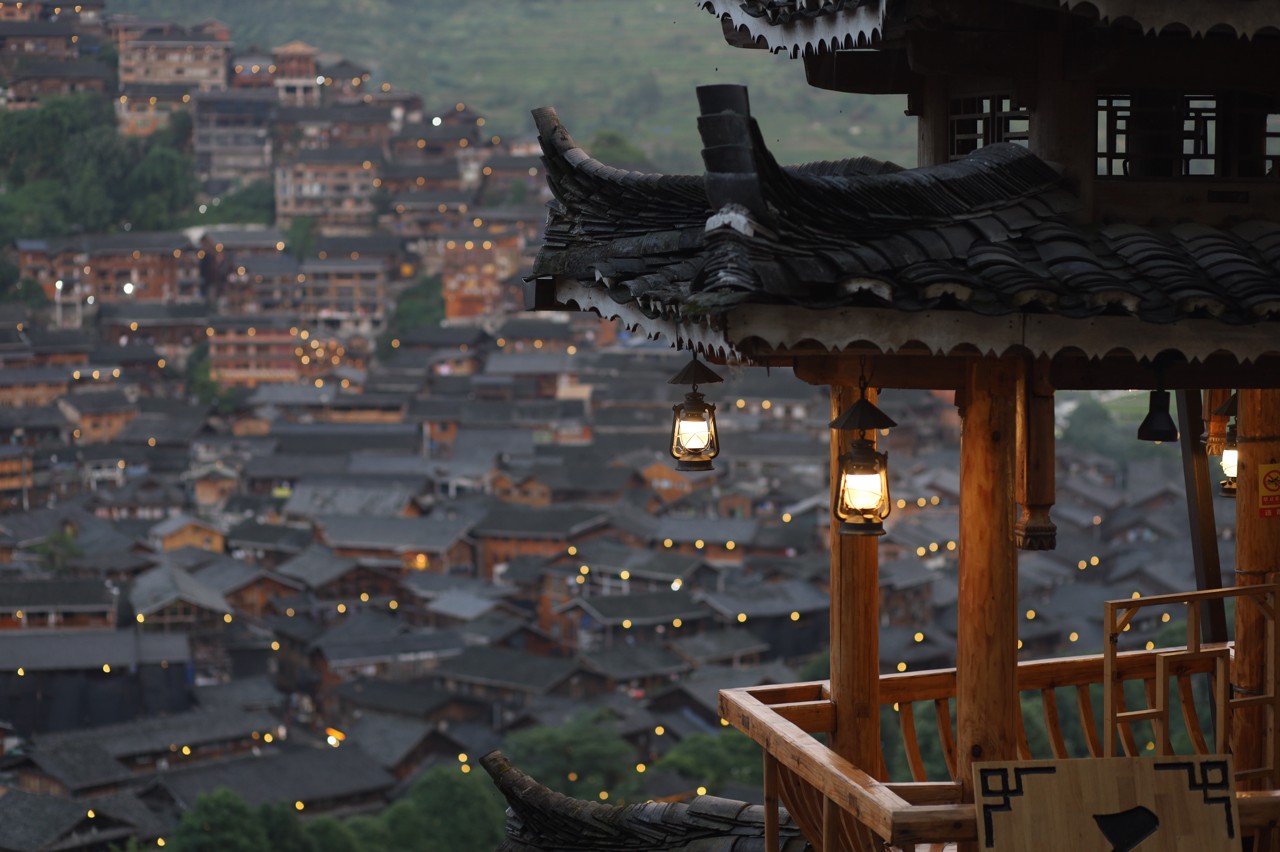
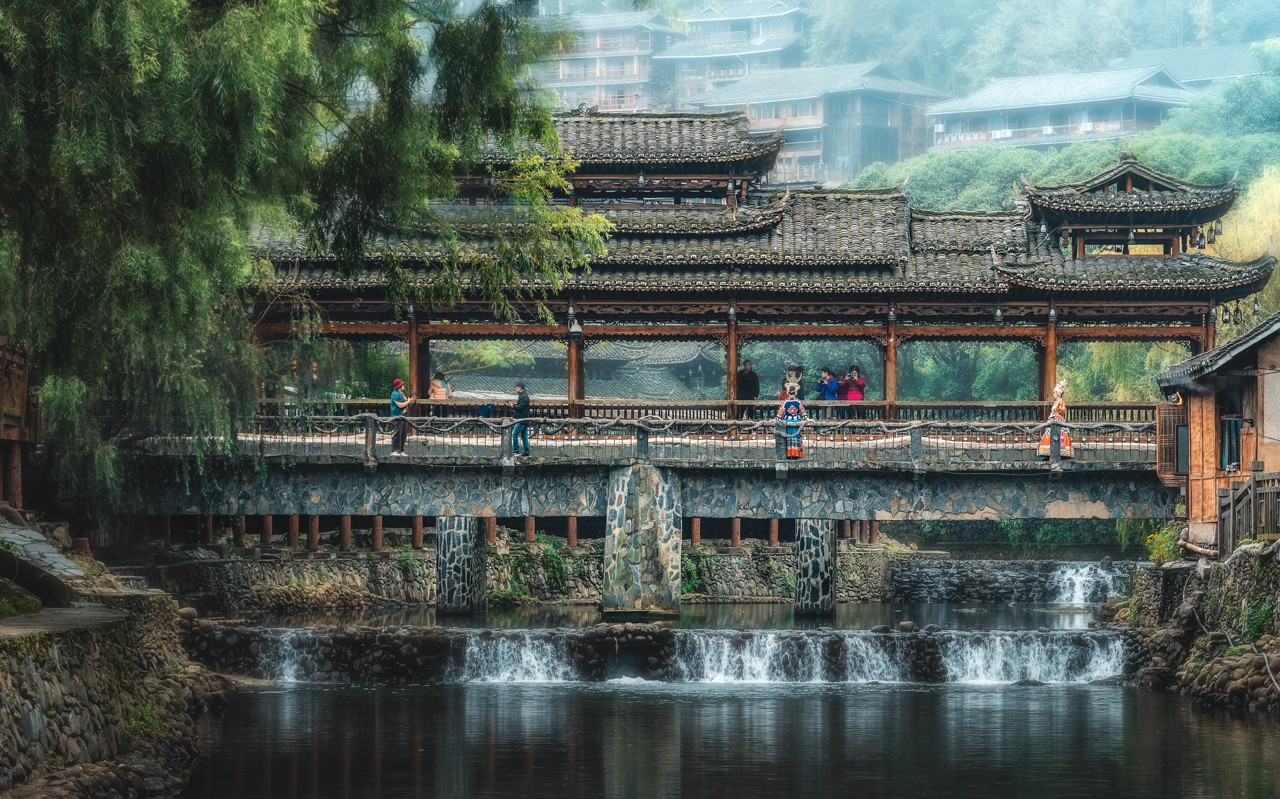
As the gates of the Thousand-House Miao Village unfurl one after another, the twelve rounds of welcoming wine extend from the mountain's base right up to the village entrance. Miao maidens, crowned in silver and holding ox-horn cups, lift their voices in melodious folk songs. Amid the resounding strains of the lusheng and a tide of resplendent attire, the breathtaking spectacle of diverse ethnic costumes sharing the stage from Ji Liang is vividly reenacted. Each bowl of rice wine embodies a blessing, every chant of "Ya La Yo" a heartfelt call—this is the Miao people's most solemn tribute to guests, and the very first, joyous encounter between you, who have traveled far, and Qiandongnan.
Afternoon: Taking the Stage with the World, Celebrating Ethnic Splendor
As the sun dips low, the village gate square transforms into an international "Village T" runway. Far from the distance of Milan or Paris, here the Thousand-House Miao Village serves as the backdrop, and bluestone slabs as the stage. Visitors from Malaysia, Indonesia, and beyond, dressed in Nyonya garments and Batik shirts, stride side by side with Miao and Dong people, whose silver ornaments have been passed down through six generations. Diverse complexions and tongues converge upon this single stage—in this moment, we are all the most radiant stars on the runway, collectively writing a vivid testament to the truth that "what is ethnic is universal."
[Xijiang Thousand-House Miao Village]
Nestled in Leishan County, Qiandongnan Prefecture, Guizhou Province, the village is a contiguous cluster of over ten natural hamlets built along the mountainside. It stands as the largest Miao settlement in China and the world, earning the titles "Capital of the Miao" and "Open-Air Museum." Surrounded by mountains and traversed by the Baishui River, which divides the village into two parts, the tiered stilted houses undulate with the terrain. In the morning mist, it resembles a fairyland; at night, with myriad lights aglow, it looks like a galaxy spilled across the earth—a magnificent and awe-inspiring sight. This was the primary assembly point for the Miao people's fifth great migration, boasting a history spanning over two millennia. Intangible cultural heritage, including Miao farming practices, festivals, silver craftsmanship, song and dance, and embroidery, has been passed down through generations. The Miao New Year, the New Rice Festival, and the once-every-thirteen-years Guzang Festival are renowned far and wide. The twelve rounds of welcoming wine at the village gate represent the most solemn hospitality of the Miao, each one brimming with blessings and deep affection.
Xijiang-Kaili-Zhenyuan
- Dining situation:
- Breakfast:Yes Lunch:Yes Supper:Yes
- Accommodation:
- Zhenyuan Qixi Pu · He Family Grand Courtyard
- vehicle:
- Bus
Morning · Mythical Beasts at Your Fingertips, Intangible Heritage to Keep
Step into the Kaili Intangible Cultural Heritage and Cultural Creativity Workshop, where the vibrant threads of Miao embroidery and the rhythmic dance of blue-and-white batik weave together a corridor of ethnic aesthetics. Under the guidance of a heritage inheritor, take up the brush and draw inspiration from the mythical Ji Liang beast of The Classic of Mountains and Seas, translating your imagination onto cloth or paper. With each stroke, myth and craftsmanship meet, and the completed totem becomes a one-of-a-kind cultural memento to carry home.
Afternoon · Unveiling Tales in the Depths of Ancient Alleys
Enter Zhenyuan, where cobblestone paths wind into the depths, flanked by a dense array of Ming and Qing dynasty architecture. The Fu Family Grand Courtyard has stood here for nine generations; pushing open the creaking wooden door, one can almost hear the bustle of merchants from a century ago. From the "Six Plaques and Ten Alleys" to ancestral halls, guild halls, ancient springs, and wells, every relic whispers of the past prosperity of this "Key to Yunnan and Hunan."
Evening · Drifting on the Wuyang River to Savor an Ink-Wash Landscape
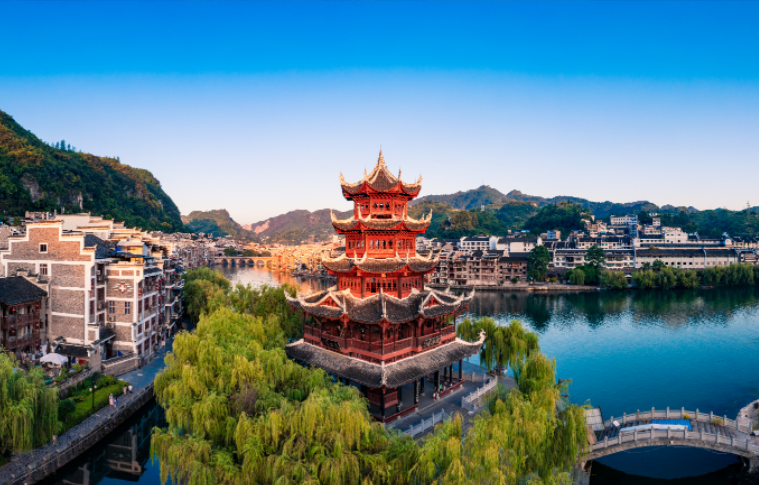
Board a small boat as the Wuyang River flows like silk, carving an "S" curve from west to east and dividing the ancient town into a tai chi diagram. Riverside homes nestle by the water, the Zhusheng Bridge spans the azure waves, and the Qinglong Cave complex clings to the cliffside, rising into the air. As the boat glides, you become part of a living painting, watching the setting sun gild the ancient structures and listening to the boatman recount a thousand years of conflict and tenderness.
Nightfall · Encountering Yangming Amidst the Soft Glow of Lanterns
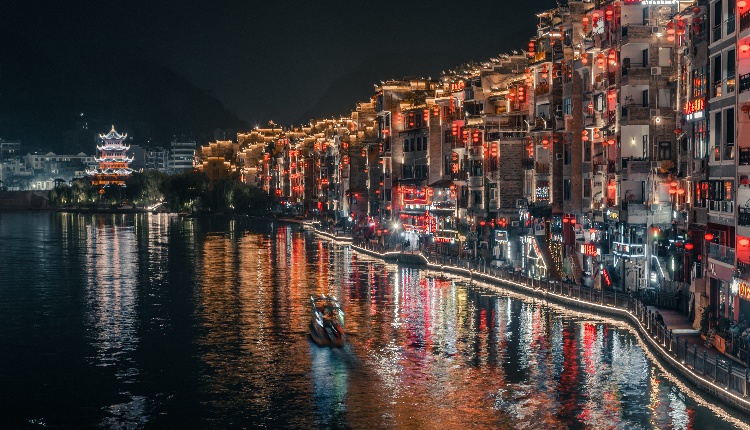
As night falls, light and shadow intertwine along the Wuyang River, and the grand outdoor山水 (mountain-and-water) spectacle Moon over the Wuyang River begins. With mountains and water as the backdrop and light as the brush, "Wang Yangming" appears, drifting on the river to seek wisdom alongside the audience. Amid the mist, auspicious dragons on upturned eaves seem to soar, and Qinglong Cave comes alive through 3D projections. Drifting on the emerald waves, immersed in the living painting, a thousand years of history feel within reach.
[Zhenyuan Ancient Town]
Nestled in Zhenyuan County, Qiandongnan Prefecture, Guizhou, Zhenyuan Ancient Town is bisected by the Wuyang River, which naturally traces an "S"-shaped tai chi diagram, creating the unique landscape of "nine mountains embracing one river, the river dividing two towns"—earning it the reputation of "Venice of the East." Established as a county in the fifth year of Emperor Gaozu of Han (202 BCE), the town boasts over 2,200 years of history. During the Ming and Qing dynasties, it served as the "Key to Yunnan and Hunan" and a vital hub on the Southern Silk Road, where Central Plains, Jingchu, Minnan, and local Miao-Dong cultures merged and flourished.
In 1986, it was designated as one of the second batch of National Famous Historical and Cultural Cities, and today it stands as a national 5A-level tourist attraction. The ancient town is dotted with historical sites: the Qinglong Cave complex, clinging to cliffs and rising skyward, blends Central Plains architecture with Miao-Dong stilted house features, earning the title "Guizhou Museum of Ancient Architecture"; the Zhusheng Bridge has withstood over six centuries of wind and rain, remaining solemn and upright; and there are over 220 Ming-Qing relics, including the Fu Family Grand Courtyard and the Tianhou Palace, with four national-level protected cultural units quietly recounting the past.
The intangible heritage lives on: dragon boat racing and the Baojing "March 3rd" festival are listed as national intangible heritage, alongside 17 provincial-level heritage items such as the Lantern Festival dragon lantern fair and Zhenyuan vegetarian banquet. Traditional crafts like tie-dyeing, embroidery, and silverware making are all available for hands-on exploration. Today's Zhenyuan invites you to wander ancient alleys by day in search of tranquility, and drift on the Wuyang River to watch performances by night—truly a "Blessed Land of Mountains and Waters, a Thousand-Year-Old Zhenyuan."
Kai-Tongren
- Dining situation:
- Breakfast:Yes Lunch:Yes Supper:Yes
- Accommodation:
- Shiqian Hot Spring Resort Hotel
- vehicle:
- Bus
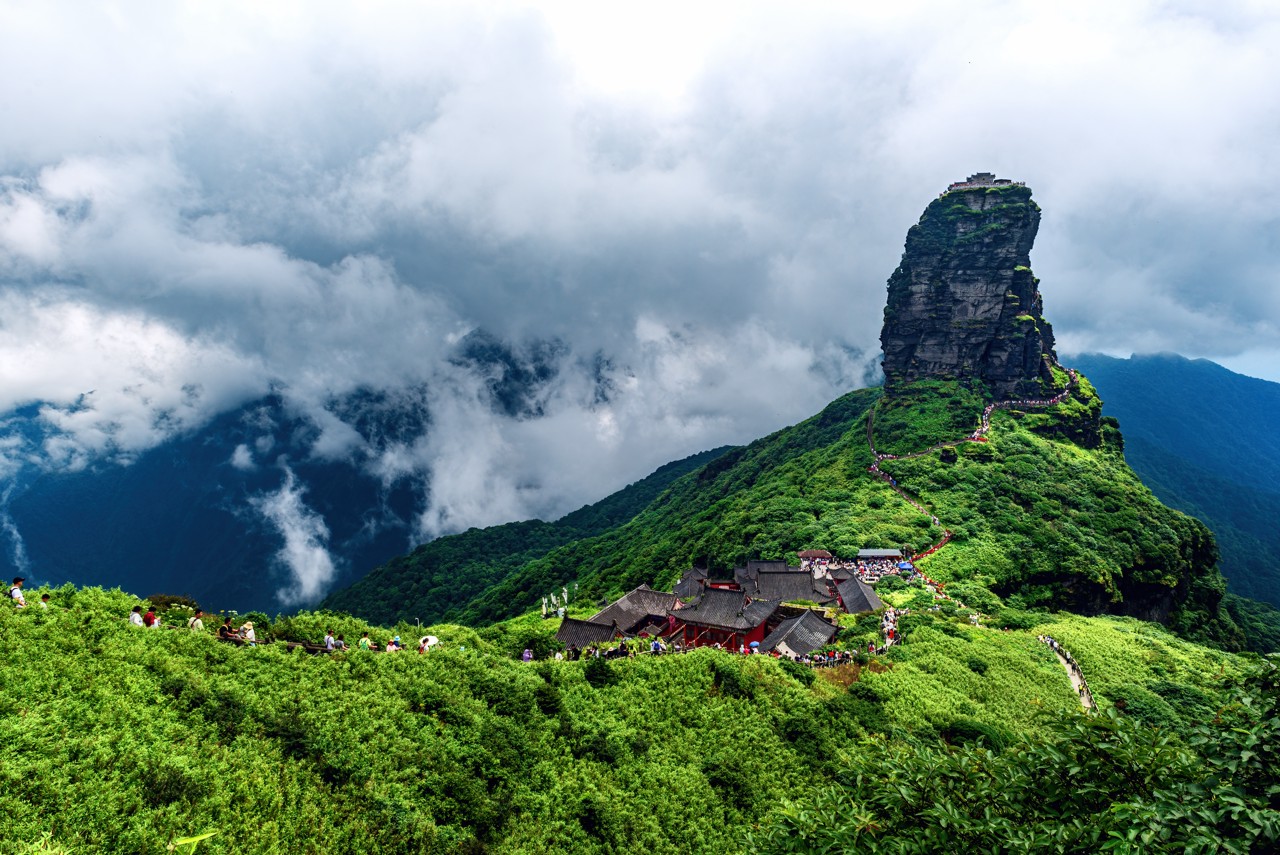
Morning · Above the Sea of Clouds, Seeking the Sky City — Ascend through the clouds via cable car to reach an altitude of 2,100 meters, where you'll find yourself "above the cloud line." Here stands the main peak of the Wuling Mountains, with a geological history spanning 1.4 billion years, inscribed as a UNESCO World Natural Heritage Site in 2018. Climb the steps to Red Cloud Golden Summit — this nearly 100-meter-tall isolated stone peak is split by the "Golden Knife Gorge" and connected by a sky bridge, often shrouded in morning mists tinged with red hues. The Mushroom Stone has stood for millennia, while layers of rock resemble stacked scriptures, and ancient temple bells echo softly through the mist. Standing atop, you're surrounded by surging clouds below and pure Buddhist lands ahead, breathing in harmony with nature.
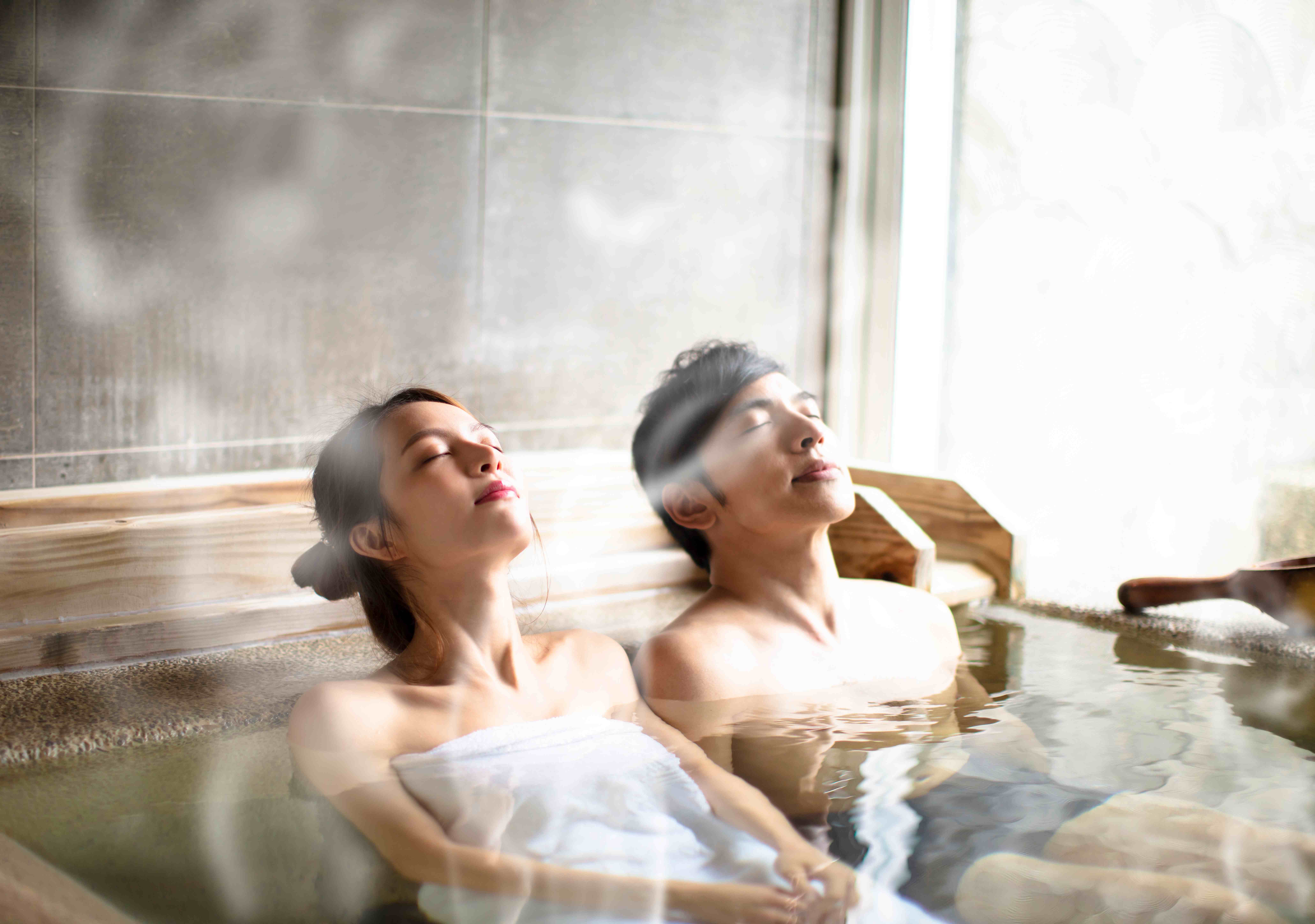
Afternoon & Evening · Shenma Rest Stop, Warm Springs Cleansing Dust — Drive eighty kilometers from Fanjingshan to Shiqian, known as China's "Hometown of Hot Springs." Its hot springs have been developed since the Ming Dynasty's Wanli era (1606), continuing for over four centuries. Maintaining a constant temperature of 45°C, these waters gush forth daily, rich in more than twenty trace elements like radon, selenium, and metasilic acid. It's uniquely certified both drinkable and bathable, earning it the title of "The First Miraculous Spring Under Heaven."
Special "Jiliang Qi-Blood Rejuvenation Package" available: Begin with Miao herbal foot soaks to unblock meridians, then relax in steaming pools, followed by traditional Chinese medicine treatments at the Gelao Medicine Center, melting away travel fatigue. The spa area features a dedicated "Shenma Rest Stop" lounge, lit warmly under yellow lamps, offering health-themed readings from classics like Classic of Mountains and Seas. You can read leaning against railings or meditate quietly. Ancient poets once inscribed phrases like "Hot Spring Rinsing Jade," "Purifying Thoughts," and "Cleansing Hearts" here. Tonight, immerse yourself in these timeless waters, washing off worldly dust and finding inner peace.
【Fanjingshan】Located in Tongren, this mountain marks the highest peak of the Wuling Range, reaching 2,572 meters above sea level. Designated a UNESCO World Natural Heritage Site in 2018, it has stood tall for 1.4 billion years, revered as "Pure Land of Brahma." Its iconic Red Cloud Golden Summit splits into two parts linked by a sky bridge, often enveloped in rosy morning clouds. The top-heavy Mushroom Stone defies gravity, standing firm for thousands of years. As Earth's sole emerald belt at its latitude, it boasts pristine ecosystems, serving as the exclusive habitat for Guizhou snub-nosed monkeys, dubbed a "living gene bank." Also a sacred Buddhist site dedicated to Maitreya Buddha, its ancient temples' chimes resonate across misty peaks.
【Shiqian Hot Springs】Situated south of Shiqian County, Tongren, these springs date back to 1606 during the Ming Dynasty, making them among China's oldest. With consistent temperatures around 45°C, they produce over ten thousand tons daily, packed with beneficial minerals. Holding dual certification for drinking and bathing, they enjoy fame as "The Premier Miraculous Spring Worldwide." Nearby stone engravings bear ancient wisdom like "Rinsing Jade" and "Cleansing Souls." Locals cherish these waters deeply, transforming the area into a comprehensive wellness retreat combining thermal bathing, health preservation, and therapeutic services. Awarded "China's Hometown of Hot Springs" in 2009, it remains a beloved cultural treasure.
Tongren-Guiyang
- Dining situation:
- Breakfast:Yes Lunch:Yes Supper:Yes
- Accommodation:
- Guizhou Hotel
- vehicle:
- Bus
Afternoon · The Grotto of Qilin, Tracing the Classic of Mountains and Seas
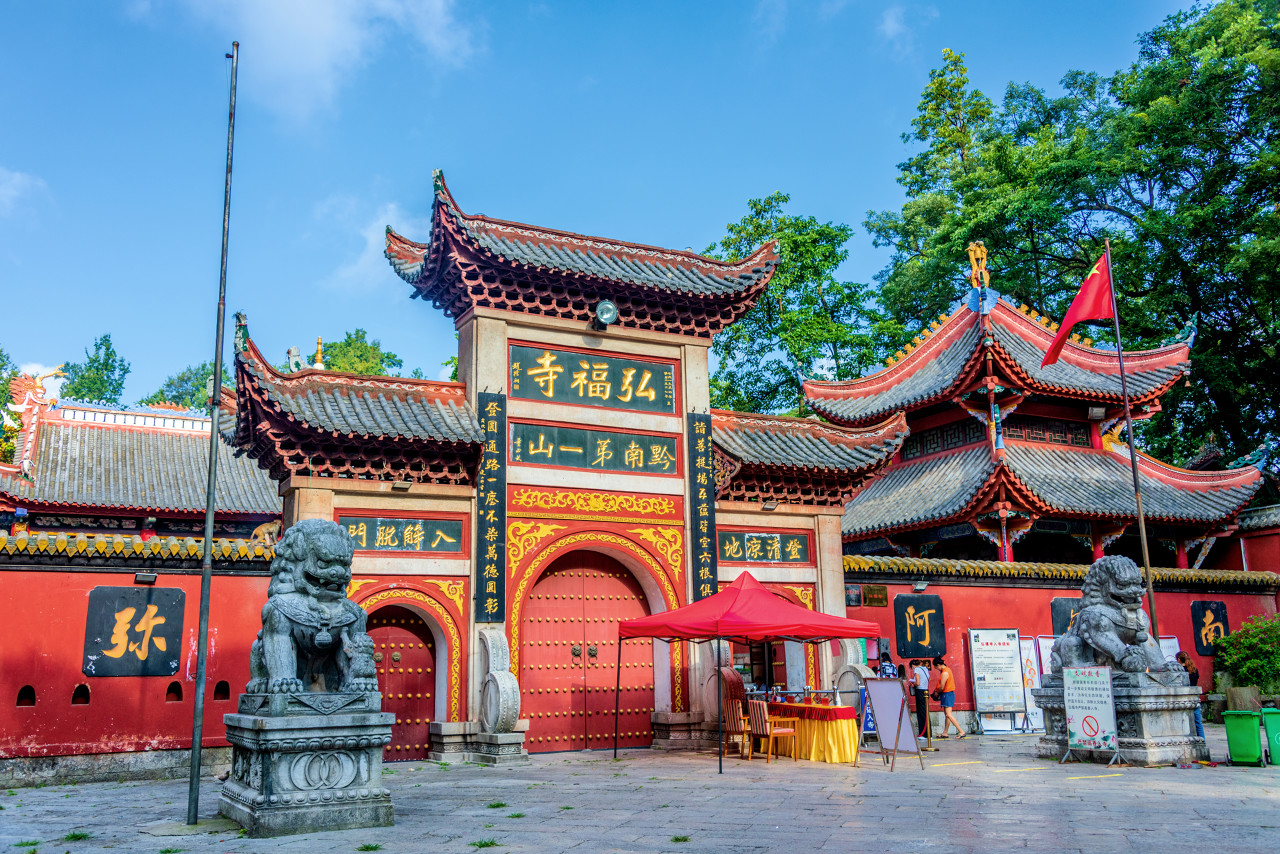
Step into Qianling Mountain Park, where the chiming of bells from Hongfu Temple accompanies you, and wild macaques frolic amidst the woods. As you wander to the Qilin Cave, this natural limestone grotto earns its name from the stalactite at its entrance, which bears a striking resemblance to a qilin (unicorn). Within, the passages wind and deepen, and stone stalagmites rise like a forest, inviting reflections on the mythical beasts of the Classic of Mountains and Seas—beyond Ji Liang, where else might the qilin roam? Guided by the narrator's vivid storytelling, mythical lore and geological marvels subtly converge, infusing the journey with an air of enchantment.
Evening · The Shimmering Splendor of Jiaxiu, A Gem of the Southern City
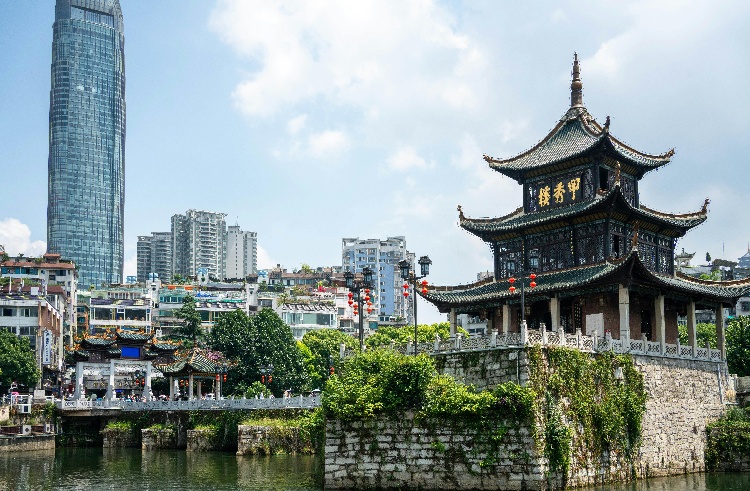
On the banks of the Nanming River, Jiaxiu Tower has stood majestically for four centuries. This three-story ancient pavilion, first erected in the 26th year of the Ming Wanli reign, serves as Guiyang's iconic landmark. As dusk falls and lights begin to glow, the Floating Jade Bridge spans the emerald waters, while Cuiwei Garden exudes an aura of timeless elegance. Ascending the tower for a distant view, the riverbanks shimmer with a kaleidoscope of lights, where the modern metropolis and ancient architecture harmonize, as if engaging in a dialogue across four centuries.
All Day · The Kaleidoscopic Guizhou, A Microcosm of Culture
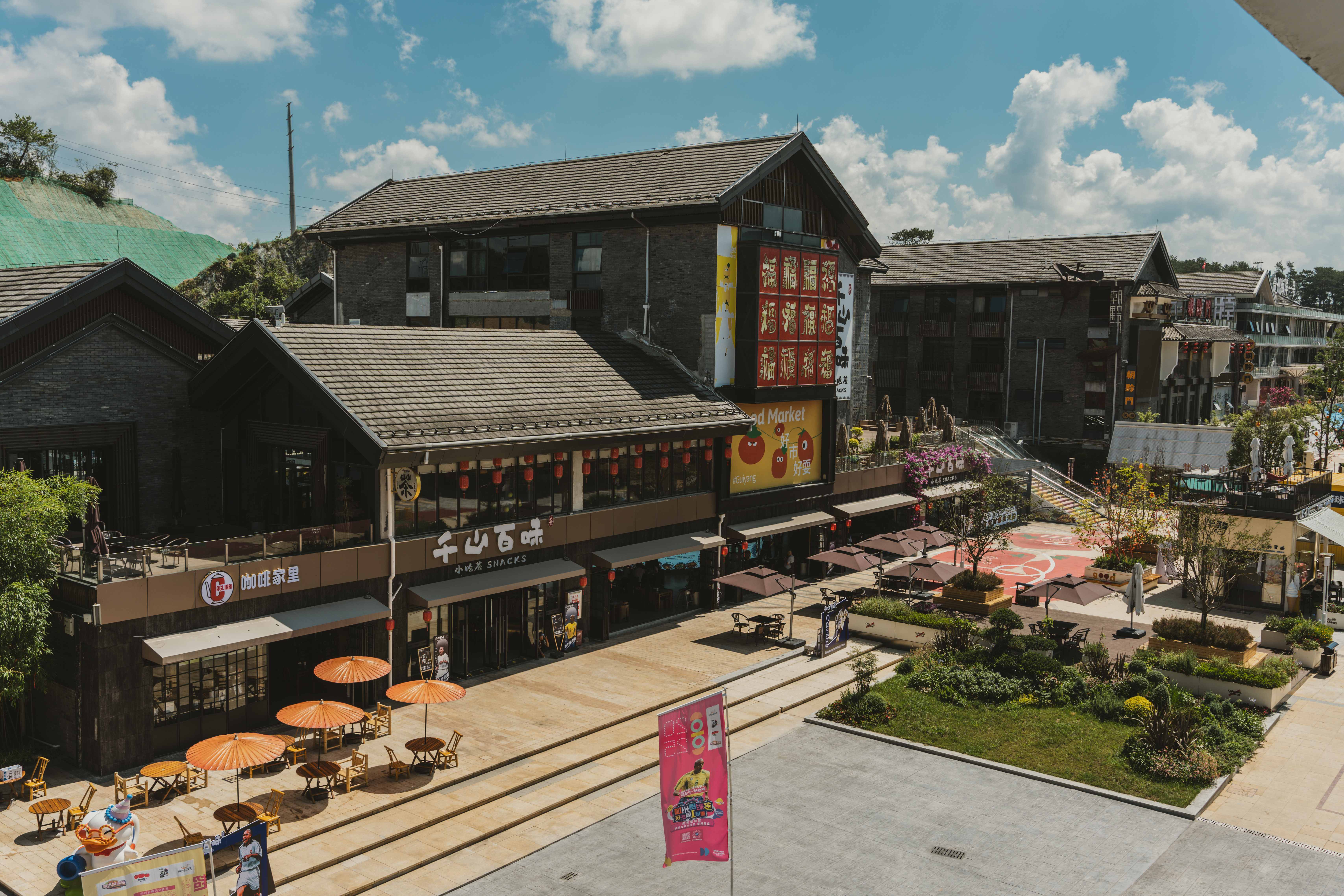
The Colorful Guizhou Town integrates displays of ethnic culture, intangible cultural heritage experiences, and local delicacies, offering a swift gateway to understanding Guizhou. Here, you may select souvenirs and savor authentic snacks like Lei Family Tofu Balls and Dan Family Crispy Duck, carrying the flavors of Guizhou back to your hometown.
[Qianling Mountain Park]
Situated in the northwest corner of Guiyang's urban area, Qianling Mountain Park was established in 1957 and is a national 4A-level tourist attraction, renowned as "the First Mountain of Southern Guizhou." The park comprises attractions such as Hongfu Temple, Qilin Cave, and Qianling Lake. With its secluded mountains, dense forests, and crystal-clear waters, it serves as a habitat for wild macaques that coexist harmoniously with visitors, earning it the title of "the city's green lung." Hongfu Temple, built in the 11th year of the Kangxi reign of the Qing Dynasty (1672), is the premier temple in Guizhou; Qilin Cave, immortalized in history as the place where Zhang Xueliang and Yang Hucheng were once held captive, features stalactites resembling a qilin treading on clouds, sparking the imagination.
[Jiaxiu Tower]
Located on the Nanming River in Guiyang's Nanming District, Jiaxiu Tower was first built in the 26th year of the Ming Wanli reign (1598), embodying the aspiration of "academic excellence." It stands as Guiyang's city landmark. The tower, approximately 20 meters tall, features three stories, three eaves, and a pyramidal roof with four corners, supported by twelve stone pillars on the Aoji Stone in the river. The Floating Jade Bridge, like white jade floating on the waves, connects Jiaxiu Tower with Cuiwei Garden. Beneath the bridge lies the Hanbi Pool, and above the tower hangs a plaque inscribed with "Excellence in Guizhou." Throughout history, scholars and poets have left numerous inscriptions, among which the 206-character long couplet composed by Liu Yushan of the Qing Dynasty is the most renowned. Listed as a national key cultural relic protection unit in 2006, the tower, ablaze with lights at night, reflects beautifully on the Nanming River, truly deserving the title of "the gem of the southern city."
[Colorful Guizhou Town]
Nestled in the Shuanglong Aviation Port Economic Zone of Guiyang, Colorful Guizhou Town is a national 4A-level tourist attraction and a showcase window for Guizhou's culture and tourism. It integrates the Festival Street, Qianyuannuo Intangible Cultural Heritage Theater, Polar Ocean World, and the 1958 Cultural and Creative Park, condensing Guizhou's diverse ethnic cultures and mountainous charm. On the Festival Street, Miao and Dong architectural styles blend with the aroma of local cuisine, allowing visitors to experience the local specialties and products from Guizhou's nine prefectures and cities in one stop.
Guiyang-Kuala Lumpur
- Dining situation:
- Breakfast:Yes Lunch:No Supper:No
- Accommodation:
- Sweet Home
- vehicle:
- Plane Bus
Airport drop-off tailored to your flight schedule
详情
l Silent Zone of the Sky Eye · Carrying Dreams to Greet the Star River
Standing upon the observation deck of the world's largest telescope, in the poised stride of the mythic steed Ji Liang that transcends mountains and seas, we carry dreams to seek the star river, reaching the profound depths of the cosmos.
l Libo's Seven-Arch Bridge · Treading Water, Leaving Ripples
Amidst the 68-tier cascading waterfalls, emerald waters serve as a mirror and the rushing falls as strings. Ethnic attire brings to life the leaping of the divine steed, capturing a fleeting yet stunning fusion of landscapes and myth.
l Before the Thousand-Household Miao Village · Sharing the Stage with the World
The twelve rounds of welcoming wine brim with heartfelt hospitality. With the lights of a thousand homes as the backdrop, attires from across the globe dazzle in a splendid display, unfolding a cross-border carnival of ethnic finery.
l Kaili Intangible Heritage Workshop · Painting Mythical Beasts at the Fingertips
Amid the patterns of silk threads, traces of the Classic of Mountains and Seas are sought. Inheritors take up brushes, imprinting the totem of Ji Liang into their hearts, turning it into an intangible heritage memory that can be carried away.
l Within the Ancient Town of Zhenyuan · Time Drifts into a Painting
The Wuyang River meanders like a tai chi diagram, with millennia-old tales hidden deep in the ancient alleys. Boarding a small boat, watch the ink-wash-like ancient town slowly blend into the flowing light.
l At the Summit of Fanjing Mountain · Cloud Sea Purifies the Earthly Dust
The cable car pierces through clouds to ascend, as the Red Cloud Golden Summit emerges and disappears on the horizon. Shrouded in mist, listen to the chiming of ancient temple bells, finding half a day of tranquility in this city of the sky.
l Warmth of Shiqian Hot Springs · The Divine Steed's Post Eases the Heart
In the steaming springs, immerse in Miao herbal therapy; at the steed's post, hold a volume of the Classic of Mountains and Seas. Let fatigue dissolve with the warmth, as body and mind return to the peace of this place.
l The Secluded Path of Qianling Mountain · The Qilin Seeks Immortal Traces
Accompanied by the chimes of Hongfu Temple, macaques frolic amidst the woods. Exploring the Qilin Grotto, we encounter the hidden realm of the Classic of Mountains and Seas amidst the urban landscape.
scheduling
Kuala Lumpur-Guiyang
- Dining situation:
- Breakfast:No Lunch:No Supper:Yes
- Accommodation:
- Guizhou Hotel
- vehicle:
- Plane Bus
Upon arrival at Guiyang Longdongbao International Airport (a designated 240-hour transit visa-free entry port), a bilingual guide will greet you, holding a "Ji Liang" totem-adorned sign. The "Night of Ji Liang" welcome banquet will be hosted at the International Conference Center or VIP Wing of Guizhou Hotel, featuring intangible cultural heritage performances such as the Miao Lusheng Dance and Dong Grand Chorus.
Guiyang-Pingtang
- Dining situation:
- Breakfast:Yes Lunch:Yes Supper:Yes
- vehicle:
- Bus
Morning · Transcending Mountains and Seas, Seeking the Firmament
Step into the Astronomical Experience Hall, where the epic journey of humanity's quest for the cosmos unfolds—from the primordial chaos to the completion of the "China Sky Eye." Much like the mythical steed Jiliang that traversed mountains and seas, the spirit of exploration resonates with the boundless starry sky, gently sowing seeds of star-chasing dreams in the heart.
Afternoon · A Steed Bearing Dreams, Gazing at the Starry Sky
Standing on the Sky Eye observation deck, the mountains undulate like waves, and the colossal eye gazes heavenward. A specially designed "Jiliang · Stargazing" photo spot captures the essence of the mythical horse soaring with dreams into the infinite universe. Each upward glance is a soulful encounter with stars billions of light-years away.
Night · Silent Contemplation, Wandering the Cosmic Void
Check into the Silent Zone Astronomy Town, switch off your phone, and let go of the clamor. Peer through a professional telescope at starlight that has traveled billions of light-years. The silence of the night in the quiet zone purifies your thoughts, allowing you to find inner clarity and tranquility amidst the vast river of stars.
[China Sky Eye]
Situated in Kedu Town, Pingtang County, Guizhou, the "China Sky Eye" is built around the world's largest and most sensitive 500-meter aperture spherical radio telescope (FAST). Harnessing a natural karst depression as its base, this national treasure has detected over a thousand pulsars, standing as a brilliant eye for humanity's exploration of the universe. The scenic area comprises the Astronomy Town and the observation deck. Visitors can delve into cosmic evolution in the astronomical experience hall, behold the true grandeur of the Sky Eye nestled among mountains from the observation deck, and gaze at the stars in the silent zone to feel the vastness of the firmament. It serves not only as a science classroom but also as a spiritual sanctuary honoring "Father of the Sky Eye" Nan Rendong, where science and dreams converge.
Pingtang-Libo
- Dining situation:
- Breakfast:Yes Lunch:Yes Supper:Yes
- Accommodation:
- Libo Guizhou Hotel Selection
- vehicle:
- Bus
Afternoon: Divine Steeds Skimming the Water, Jade Waves Etching Their Mark
Stepping into Xiaoqikong feels like descending into a verdant fairyland. The 68-tier cascading waterfalls tumble in layers, their splashing spray scattering like shattered jade, while the tranquil pools lie deep and emerald. On the specially designed "Ji Liang Water-Treading" viewing platform, models clad in ethnic attire stand poised above the ripples. With the graceful flutter of their garments, they bring to life the soaring posture of the divine steed. A soft click of the shutter immortalizes both myth and the essence of the landscape—though the steed treads without a trace, it leaves an unforgettable impression here.
Night: Weaving Dreams with Light and Shadow, Mythical Beasts Entering the Scene
As the lamps of Libo Ancient Town are lit, the "Ji Liang · Landscape Live Show" unfolds. With the night sky as the backdrop and the mountains and waters as the stage, light and shadow technologies sketch the mysterious realm of The Classic of Mountains and Seas among the ancient architecture. The divine steed Ji Liang arrives treading moonlight, and rare beasts emerge from the woods. Here, modern technology meets ancient lore, transforming millennia of imagination into a flowing, luminous poem before your eyes.
【Libo Xiaoqikong】
Nestled among the peaks south of Libo County, this scenic area spans about 7 kilometers. Integrating mountains, waters, forests, caves, lakes, and waterfalls, it is hailed as the most brilliant facet of the "Green Jewel on the Earth's Belt."
68-Tier Cascading Waterfall
In the narrow valley upstream of the Hanbi Pool, tiered waterfalls plunge downward along the gradient. At times scattering pearls and jade, at times pushing snow and embracing clouds, they form a 300-meter-long sequence of 68 cascades, their murmuring sound as melodious as celestial music.
Water Forest
Over a thousand rare trees take root in the rushing clear stream—trees grow within the water, and water flows through the forest. Wandering along the stone steps, with the stream babbling beneath your feet and leaves rustling overhead, you feel as if you have stepped into a secret realm where spirits dwell.
Libo-Xijiang
- Dining situation:
- Breakfast:Yes Lunch:Yes Supper:Yes
- Accommodation:
- Kaili Mid-Mountain Hotel
- vehicle:
- Bus
Morning: The Twelvefold Welcome, A Grand Salute to Distant Guests
As the gates of the Thousand-House Miao Village unfurl one after another, the twelve rounds of welcoming wine extend from the mountain's base right up to the village entrance. Miao maidens, crowned in silver and holding ox-horn cups, lift their voices in melodious folk songs. Amid the resounding strains of the lusheng and a tide of resplendent attire, the breathtaking spectacle of diverse ethnic costumes sharing the stage from Ji Liang is vividly reenacted. Each bowl of rice wine embodies a blessing, every chant of "Ya La Yo" a heartfelt call—this is the Miao people's most solemn tribute to guests, and the very first, joyous encounter between you, who have traveled far, and Qiandongnan.
Afternoon: Taking the Stage with the World, Celebrating Ethnic Splendor
As the sun dips low, the village gate square transforms into an international "Village T" runway. Far from the distance of Milan or Paris, here the Thousand-House Miao Village serves as the backdrop, and bluestone slabs as the stage. Visitors from Malaysia, Indonesia, and beyond, dressed in Nyonya garments and Batik shirts, stride side by side with Miao and Dong people, whose silver ornaments have been passed down through six generations. Diverse complexions and tongues converge upon this single stage—in this moment, we are all the most radiant stars on the runway, collectively writing a vivid testament to the truth that "what is ethnic is universal."
[Xijiang Thousand-House Miao Village]
Nestled in Leishan County, Qiandongnan Prefecture, Guizhou Province, the village is a contiguous cluster of over ten natural hamlets built along the mountainside. It stands as the largest Miao settlement in China and the world, earning the titles "Capital of the Miao" and "Open-Air Museum." Surrounded by mountains and traversed by the Baishui River, which divides the village into two parts, the tiered stilted houses undulate with the terrain. In the morning mist, it resembles a fairyland; at night, with myriad lights aglow, it looks like a galaxy spilled across the earth—a magnificent and awe-inspiring sight. This was the primary assembly point for the Miao people's fifth great migration, boasting a history spanning over two millennia. Intangible cultural heritage, including Miao farming practices, festivals, silver craftsmanship, song and dance, and embroidery, has been passed down through generations. The Miao New Year, the New Rice Festival, and the once-every-thirteen-years Guzang Festival are renowned far and wide. The twelve rounds of welcoming wine at the village gate represent the most solemn hospitality of the Miao, each one brimming with blessings and deep affection.
Xijiang-Kaili-Zhenyuan
- Dining situation:
- Breakfast:Yes Lunch:Yes Supper:Yes
- Accommodation:
- Zhenyuan Qixi Pu · He Family Grand Courtyard
- vehicle:
- Bus
Morning · Mythical Beasts at Your Fingertips, Intangible Heritage to Keep
Step into the Kaili Intangible Cultural Heritage and Cultural Creativity Workshop, where the vibrant threads of Miao embroidery and the rhythmic dance of blue-and-white batik weave together a corridor of ethnic aesthetics. Under the guidance of a heritage inheritor, take up the brush and draw inspiration from the mythical Ji Liang beast of The Classic of Mountains and Seas, translating your imagination onto cloth or paper. With each stroke, myth and craftsmanship meet, and the completed totem becomes a one-of-a-kind cultural memento to carry home.
Afternoon · Unveiling Tales in the Depths of Ancient Alleys
Enter Zhenyuan, where cobblestone paths wind into the depths, flanked by a dense array of Ming and Qing dynasty architecture. The Fu Family Grand Courtyard has stood here for nine generations; pushing open the creaking wooden door, one can almost hear the bustle of merchants from a century ago. From the "Six Plaques and Ten Alleys" to ancestral halls, guild halls, ancient springs, and wells, every relic whispers of the past prosperity of this "Key to Yunnan and Hunan."
Evening · Drifting on the Wuyang River to Savor an Ink-Wash Landscape
Board a small boat as the Wuyang River flows like silk, carving an "S" curve from west to east and dividing the ancient town into a tai chi diagram. Riverside homes nestle by the water, the Zhusheng Bridge spans the azure waves, and the Qinglong Cave complex clings to the cliffside, rising into the air. As the boat glides, you become part of a living painting, watching the setting sun gild the ancient structures and listening to the boatman recount a thousand years of conflict and tenderness.
Nightfall · Encountering Yangming Amidst the Soft Glow of Lanterns
As night falls, light and shadow intertwine along the Wuyang River, and the grand outdoor山水 (mountain-and-water) spectacle Moon over the Wuyang River begins. With mountains and water as the backdrop and light as the brush, "Wang Yangming" appears, drifting on the river to seek wisdom alongside the audience. Amid the mist, auspicious dragons on upturned eaves seem to soar, and Qinglong Cave comes alive through 3D projections. Drifting on the emerald waves, immersed in the living painting, a thousand years of history feel within reach.
[Zhenyuan Ancient Town]
Nestled in Zhenyuan County, Qiandongnan Prefecture, Guizhou, Zhenyuan Ancient Town is bisected by the Wuyang River, which naturally traces an "S"-shaped tai chi diagram, creating the unique landscape of "nine mountains embracing one river, the river dividing two towns"—earning it the reputation of "Venice of the East." Established as a county in the fifth year of Emperor Gaozu of Han (202 BCE), the town boasts over 2,200 years of history. During the Ming and Qing dynasties, it served as the "Key to Yunnan and Hunan" and a vital hub on the Southern Silk Road, where Central Plains, Jingchu, Minnan, and local Miao-Dong cultures merged and flourished.
In 1986, it was designated as one of the second batch of National Famous Historical and Cultural Cities, and today it stands as a national 5A-level tourist attraction. The ancient town is dotted with historical sites: the Qinglong Cave complex, clinging to cliffs and rising skyward, blends Central Plains architecture with Miao-Dong stilted house features, earning the title "Guizhou Museum of Ancient Architecture"; the Zhusheng Bridge has withstood over six centuries of wind and rain, remaining solemn and upright; and there are over 220 Ming-Qing relics, including the Fu Family Grand Courtyard and the Tianhou Palace, with four national-level protected cultural units quietly recounting the past.
The intangible heritage lives on: dragon boat racing and the Baojing "March 3rd" festival are listed as national intangible heritage, alongside 17 provincial-level heritage items such as the Lantern Festival dragon lantern fair and Zhenyuan vegetarian banquet. Traditional crafts like tie-dyeing, embroidery, and silverware making are all available for hands-on exploration. Today's Zhenyuan invites you to wander ancient alleys by day in search of tranquility, and drift on the Wuyang River to watch performances by night—truly a "Blessed Land of Mountains and Waters, a Thousand-Year-Old Zhenyuan."
Kai-Tongren
- Dining situation:
- Breakfast:Yes Lunch:Yes Supper:Yes
- Accommodation:
- Shiqian Hot Spring Resort Hotel
- vehicle:
- Bus
Morning · Above the Sea of Clouds, Seeking the Sky City — Ascend through the clouds via cable car to reach an altitude of 2,100 meters, where you'll find yourself "above the cloud line." Here stands the main peak of the Wuling Mountains, with a geological history spanning 1.4 billion years, inscribed as a UNESCO World Natural Heritage Site in 2018. Climb the steps to Red Cloud Golden Summit — this nearly 100-meter-tall isolated stone peak is split by the "Golden Knife Gorge" and connected by a sky bridge, often shrouded in morning mists tinged with red hues. The Mushroom Stone has stood for millennia, while layers of rock resemble stacked scriptures, and ancient temple bells echo softly through the mist. Standing atop, you're surrounded by surging clouds below and pure Buddhist lands ahead, breathing in harmony with nature.
Afternoon & Evening · Shenma Rest Stop, Warm Springs Cleansing Dust — Drive eighty kilometers from Fanjingshan to Shiqian, known as China's "Hometown of Hot Springs." Its hot springs have been developed since the Ming Dynasty's Wanli era (1606), continuing for over four centuries. Maintaining a constant temperature of 45°C, these waters gush forth daily, rich in more than twenty trace elements like radon, selenium, and metasilic acid. It's uniquely certified both drinkable and bathable, earning it the title of "The First Miraculous Spring Under Heaven."
Special "Jiliang Qi-Blood Rejuvenation Package" available: Begin with Miao herbal foot soaks to unblock meridians, then relax in steaming pools, followed by traditional Chinese medicine treatments at the Gelao Medicine Center, melting away travel fatigue. The spa area features a dedicated "Shenma Rest Stop" lounge, lit warmly under yellow lamps, offering health-themed readings from classics like Classic of Mountains and Seas. You can read leaning against railings or meditate quietly. Ancient poets once inscribed phrases like "Hot Spring Rinsing Jade," "Purifying Thoughts," and "Cleansing Hearts" here. Tonight, immerse yourself in these timeless waters, washing off worldly dust and finding inner peace.
【Fanjingshan】Located in Tongren, this mountain marks the highest peak of the Wuling Range, reaching 2,572 meters above sea level. Designated a UNESCO World Natural Heritage Site in 2018, it has stood tall for 1.4 billion years, revered as "Pure Land of Brahma." Its iconic Red Cloud Golden Summit splits into two parts linked by a sky bridge, often enveloped in rosy morning clouds. The top-heavy Mushroom Stone defies gravity, standing firm for thousands of years. As Earth's sole emerald belt at its latitude, it boasts pristine ecosystems, serving as the exclusive habitat for Guizhou snub-nosed monkeys, dubbed a "living gene bank." Also a sacred Buddhist site dedicated to Maitreya Buddha, its ancient temples' chimes resonate across misty peaks.
【Shiqian Hot Springs】Situated south of Shiqian County, Tongren, these springs date back to 1606 during the Ming Dynasty, making them among China's oldest. With consistent temperatures around 45°C, they produce over ten thousand tons daily, packed with beneficial minerals. Holding dual certification for drinking and bathing, they enjoy fame as "The Premier Miraculous Spring Worldwide." Nearby stone engravings bear ancient wisdom like "Rinsing Jade" and "Cleansing Souls." Locals cherish these waters deeply, transforming the area into a comprehensive wellness retreat combining thermal bathing, health preservation, and therapeutic services. Awarded "China's Hometown of Hot Springs" in 2009, it remains a beloved cultural treasure.
Tongren-Guiyang
- Dining situation:
- Breakfast:Yes Lunch:Yes Supper:Yes
- Accommodation:
- Guizhou Hotel
- vehicle:
- Bus
Afternoon · The Grotto of Qilin, Tracing the Classic of Mountains and Seas
Step into Qianling Mountain Park, where the chiming of bells from Hongfu Temple accompanies you, and wild macaques frolic amidst the woods. As you wander to the Qilin Cave, this natural limestone grotto earns its name from the stalactite at its entrance, which bears a striking resemblance to a qilin (unicorn). Within, the passages wind and deepen, and stone stalagmites rise like a forest, inviting reflections on the mythical beasts of the Classic of Mountains and Seas—beyond Ji Liang, where else might the qilin roam? Guided by the narrator's vivid storytelling, mythical lore and geological marvels subtly converge, infusing the journey with an air of enchantment.
Evening · The Shimmering Splendor of Jiaxiu, A Gem of the Southern City
On the banks of the Nanming River, Jiaxiu Tower has stood majestically for four centuries. This three-story ancient pavilion, first erected in the 26th year of the Ming Wanli reign, serves as Guiyang's iconic landmark. As dusk falls and lights begin to glow, the Floating Jade Bridge spans the emerald waters, while Cuiwei Garden exudes an aura of timeless elegance. Ascending the tower for a distant view, the riverbanks shimmer with a kaleidoscope of lights, where the modern metropolis and ancient architecture harmonize, as if engaging in a dialogue across four centuries.
All Day · The Kaleidoscopic Guizhou, A Microcosm of Culture
The Colorful Guizhou Town integrates displays of ethnic culture, intangible cultural heritage experiences, and local delicacies, offering a swift gateway to understanding Guizhou. Here, you may select souvenirs and savor authentic snacks like Lei Family Tofu Balls and Dan Family Crispy Duck, carrying the flavors of Guizhou back to your hometown.
[Qianling Mountain Park]
Situated in the northwest corner of Guiyang's urban area, Qianling Mountain Park was established in 1957 and is a national 4A-level tourist attraction, renowned as "the First Mountain of Southern Guizhou." The park comprises attractions such as Hongfu Temple, Qilin Cave, and Qianling Lake. With its secluded mountains, dense forests, and crystal-clear waters, it serves as a habitat for wild macaques that coexist harmoniously with visitors, earning it the title of "the city's green lung." Hongfu Temple, built in the 11th year of the Kangxi reign of the Qing Dynasty (1672), is the premier temple in Guizhou; Qilin Cave, immortalized in history as the place where Zhang Xueliang and Yang Hucheng were once held captive, features stalactites resembling a qilin treading on clouds, sparking the imagination.
[Jiaxiu Tower]
Located on the Nanming River in Guiyang's Nanming District, Jiaxiu Tower was first built in the 26th year of the Ming Wanli reign (1598), embodying the aspiration of "academic excellence." It stands as Guiyang's city landmark. The tower, approximately 20 meters tall, features three stories, three eaves, and a pyramidal roof with four corners, supported by twelve stone pillars on the Aoji Stone in the river. The Floating Jade Bridge, like white jade floating on the waves, connects Jiaxiu Tower with Cuiwei Garden. Beneath the bridge lies the Hanbi Pool, and above the tower hangs a plaque inscribed with "Excellence in Guizhou." Throughout history, scholars and poets have left numerous inscriptions, among which the 206-character long couplet composed by Liu Yushan of the Qing Dynasty is the most renowned. Listed as a national key cultural relic protection unit in 2006, the tower, ablaze with lights at night, reflects beautifully on the Nanming River, truly deserving the title of "the gem of the southern city."
[Colorful Guizhou Town]
Nestled in the Shuanglong Aviation Port Economic Zone of Guiyang, Colorful Guizhou Town is a national 4A-level tourist attraction and a showcase window for Guizhou's culture and tourism. It integrates the Festival Street, Qianyuannuo Intangible Cultural Heritage Theater, Polar Ocean World, and the 1958 Cultural and Creative Park, condensing Guizhou's diverse ethnic cultures and mountainous charm. On the Festival Street, Miao and Dong architectural styles blend with the aroma of local cuisine, allowing visitors to experience the local specialties and products from Guizhou's nine prefectures and cities in one stop.
Guiyang-Kuala Lumpur
- Dining situation:
- Breakfast:Yes Lunch:No Supper:No
- Accommodation:
- Sweet Home
- vehicle:
- Plane Bus
Airport drop-off tailored to your flight schedule
scheduling
Kuala Lumpur-Guiyang
- Dining situation:
- Breakfast:No Lunch:No Supper:Yes
- Accommodation:
- Guizhou Hotel
- vehicle:
- Plane Bus
Upon arrival at Guiyang Longdongbao International Airport (a designated 240-hour transit visa-free entry port), a bilingual guide will greet you, holding a "Ji Liang" totem-adorned sign. The "Night of Ji Liang" welcome banquet will be hosted at the International Conference Center or VIP Wing of Guizhou Hotel, featuring intangible cultural heritage performances such as the Miao Lusheng Dance and Dong Grand Chorus.
Guiyang-Pingtang
- Dining situation:
- Breakfast:Yes Lunch:Yes Supper:Yes
- vehicle:
- Bus
Morning · Transcending Mountains and Seas, Seeking the Firmament
Step into the Astronomical Experience Hall, where the epic journey of humanity's quest for the cosmos unfolds—from the primordial chaos to the completion of the "China Sky Eye." Much like the mythical steed Jiliang that traversed mountains and seas, the spirit of exploration resonates with the boundless starry sky, gently sowing seeds of star-chasing dreams in the heart.
Afternoon · A Steed Bearing Dreams, Gazing at the Starry Sky
Standing on the Sky Eye observation deck, the mountains undulate like waves, and the colossal eye gazes heavenward. A specially designed "Jiliang · Stargazing" photo spot captures the essence of the mythical horse soaring with dreams into the infinite universe. Each upward glance is a soulful encounter with stars billions of light-years away.
Night · Silent Contemplation, Wandering the Cosmic Void
Check into the Silent Zone Astronomy Town, switch off your phone, and let go of the clamor. Peer through a professional telescope at starlight that has traveled billions of light-years. The silence of the night in the quiet zone purifies your thoughts, allowing you to find inner clarity and tranquility amidst the vast river of stars.
[China Sky Eye]
Situated in Kedu Town, Pingtang County, Guizhou, the "China Sky Eye" is built around the world's largest and most sensitive 500-meter aperture spherical radio telescope (FAST). Harnessing a natural karst depression as its base, this national treasure has detected over a thousand pulsars, standing as a brilliant eye for humanity's exploration of the universe. The scenic area comprises the Astronomy Town and the observation deck. Visitors can delve into cosmic evolution in the astronomical experience hall, behold the true grandeur of the Sky Eye nestled among mountains from the observation deck, and gaze at the stars in the silent zone to feel the vastness of the firmament. It serves not only as a science classroom but also as a spiritual sanctuary honoring "Father of the Sky Eye" Nan Rendong, where science and dreams converge.
Pingtang-Libo
- Dining situation:
- Breakfast:Yes Lunch:Yes Supper:Yes
- Accommodation:
- Libo Guizhou Hotel Selection
- vehicle:
- Bus
Afternoon: Divine Steeds Skimming the Water, Jade Waves Etching Their Mark
Stepping into Xiaoqikong feels like descending into a verdant fairyland. The 68-tier cascading waterfalls tumble in layers, their splashing spray scattering like shattered jade, while the tranquil pools lie deep and emerald. On the specially designed "Ji Liang Water-Treading" viewing platform, models clad in ethnic attire stand poised above the ripples. With the graceful flutter of their garments, they bring to life the soaring posture of the divine steed. A soft click of the shutter immortalizes both myth and the essence of the landscape—though the steed treads without a trace, it leaves an unforgettable impression here.
Night: Weaving Dreams with Light and Shadow, Mythical Beasts Entering the Scene
As the lamps of Libo Ancient Town are lit, the "Ji Liang · Landscape Live Show" unfolds. With the night sky as the backdrop and the mountains and waters as the stage, light and shadow technologies sketch the mysterious realm of The Classic of Mountains and Seas among the ancient architecture. The divine steed Ji Liang arrives treading moonlight, and rare beasts emerge from the woods. Here, modern technology meets ancient lore, transforming millennia of imagination into a flowing, luminous poem before your eyes.
【Libo Xiaoqikong】
Nestled among the peaks south of Libo County, this scenic area spans about 7 kilometers. Integrating mountains, waters, forests, caves, lakes, and waterfalls, it is hailed as the most brilliant facet of the "Green Jewel on the Earth's Belt."
68-Tier Cascading Waterfall
In the narrow valley upstream of the Hanbi Pool, tiered waterfalls plunge downward along the gradient. At times scattering pearls and jade, at times pushing snow and embracing clouds, they form a 300-meter-long sequence of 68 cascades, their murmuring sound as melodious as celestial music.
Water Forest
Over a thousand rare trees take root in the rushing clear stream—trees grow within the water, and water flows through the forest. Wandering along the stone steps, with the stream babbling beneath your feet and leaves rustling overhead, you feel as if you have stepped into a secret realm where spirits dwell.
Libo-Xijiang
- Dining situation:
- Breakfast:Yes Lunch:Yes Supper:Yes
- Accommodation:
- Kaili Mid-Mountain Hotel
- vehicle:
- Bus
Morning: The Twelvefold Welcome, A Grand Salute to Distant Guests
As the gates of the Thousand-House Miao Village unfurl one after another, the twelve rounds of welcoming wine extend from the mountain's base right up to the village entrance. Miao maidens, crowned in silver and holding ox-horn cups, lift their voices in melodious folk songs. Amid the resounding strains of the lusheng and a tide of resplendent attire, the breathtaking spectacle of diverse ethnic costumes sharing the stage from Ji Liang is vividly reenacted. Each bowl of rice wine embodies a blessing, every chant of "Ya La Yo" a heartfelt call—this is the Miao people's most solemn tribute to guests, and the very first, joyous encounter between you, who have traveled far, and Qiandongnan.
Afternoon: Taking the Stage with the World, Celebrating Ethnic Splendor
As the sun dips low, the village gate square transforms into an international "Village T" runway. Far from the distance of Milan or Paris, here the Thousand-House Miao Village serves as the backdrop, and bluestone slabs as the stage. Visitors from Malaysia, Indonesia, and beyond, dressed in Nyonya garments and Batik shirts, stride side by side with Miao and Dong people, whose silver ornaments have been passed down through six generations. Diverse complexions and tongues converge upon this single stage—in this moment, we are all the most radiant stars on the runway, collectively writing a vivid testament to the truth that "what is ethnic is universal."
[Xijiang Thousand-House Miao Village]
Nestled in Leishan County, Qiandongnan Prefecture, Guizhou Province, the village is a contiguous cluster of over ten natural hamlets built along the mountainside. It stands as the largest Miao settlement in China and the world, earning the titles "Capital of the Miao" and "Open-Air Museum." Surrounded by mountains and traversed by the Baishui River, which divides the village into two parts, the tiered stilted houses undulate with the terrain. In the morning mist, it resembles a fairyland; at night, with myriad lights aglow, it looks like a galaxy spilled across the earth—a magnificent and awe-inspiring sight. This was the primary assembly point for the Miao people's fifth great migration, boasting a history spanning over two millennia. Intangible cultural heritage, including Miao farming practices, festivals, silver craftsmanship, song and dance, and embroidery, has been passed down through generations. The Miao New Year, the New Rice Festival, and the once-every-thirteen-years Guzang Festival are renowned far and wide. The twelve rounds of welcoming wine at the village gate represent the most solemn hospitality of the Miao, each one brimming with blessings and deep affection.
Xijiang-Kaili-Zhenyuan
- Dining situation:
- Breakfast:Yes Lunch:Yes Supper:Yes
- Accommodation:
- Zhenyuan Qixi Pu · He Family Grand Courtyard
- vehicle:
- Bus
Morning · Mythical Beasts at Your Fingertips, Intangible Heritage to Keep
Step into the Kaili Intangible Cultural Heritage and Cultural Creativity Workshop, where the vibrant threads of Miao embroidery and the rhythmic dance of blue-and-white batik weave together a corridor of ethnic aesthetics. Under the guidance of a heritage inheritor, take up the brush and draw inspiration from the mythical Ji Liang beast of The Classic of Mountains and Seas, translating your imagination onto cloth or paper. With each stroke, myth and craftsmanship meet, and the completed totem becomes a one-of-a-kind cultural memento to carry home.
Afternoon · Unveiling Tales in the Depths of Ancient Alleys
Enter Zhenyuan, where cobblestone paths wind into the depths, flanked by a dense array of Ming and Qing dynasty architecture. The Fu Family Grand Courtyard has stood here for nine generations; pushing open the creaking wooden door, one can almost hear the bustle of merchants from a century ago. From the "Six Plaques and Ten Alleys" to ancestral halls, guild halls, ancient springs, and wells, every relic whispers of the past prosperity of this "Key to Yunnan and Hunan."
Evening · Drifting on the Wuyang River to Savor an Ink-Wash Landscape
Board a small boat as the Wuyang River flows like silk, carving an "S" curve from west to east and dividing the ancient town into a tai chi diagram. Riverside homes nestle by the water, the Zhusheng Bridge spans the azure waves, and the Qinglong Cave complex clings to the cliffside, rising into the air. As the boat glides, you become part of a living painting, watching the setting sun gild the ancient structures and listening to the boatman recount a thousand years of conflict and tenderness.
Nightfall · Encountering Yangming Amidst the Soft Glow of Lanterns
As night falls, light and shadow intertwine along the Wuyang River, and the grand outdoor山水 (mountain-and-water) spectacle Moon over the Wuyang River begins. With mountains and water as the backdrop and light as the brush, "Wang Yangming" appears, drifting on the river to seek wisdom alongside the audience. Amid the mist, auspicious dragons on upturned eaves seem to soar, and Qinglong Cave comes alive through 3D projections. Drifting on the emerald waves, immersed in the living painting, a thousand years of history feel within reach.
[Zhenyuan Ancient Town]
Nestled in Zhenyuan County, Qiandongnan Prefecture, Guizhou, Zhenyuan Ancient Town is bisected by the Wuyang River, which naturally traces an "S"-shaped tai chi diagram, creating the unique landscape of "nine mountains embracing one river, the river dividing two towns"—earning it the reputation of "Venice of the East." Established as a county in the fifth year of Emperor Gaozu of Han (202 BCE), the town boasts over 2,200 years of history. During the Ming and Qing dynasties, it served as the "Key to Yunnan and Hunan" and a vital hub on the Southern Silk Road, where Central Plains, Jingchu, Minnan, and local Miao-Dong cultures merged and flourished.
In 1986, it was designated as one of the second batch of National Famous Historical and Cultural Cities, and today it stands as a national 5A-level tourist attraction. The ancient town is dotted with historical sites: the Qinglong Cave complex, clinging to cliffs and rising skyward, blends Central Plains architecture with Miao-Dong stilted house features, earning the title "Guizhou Museum of Ancient Architecture"; the Zhusheng Bridge has withstood over six centuries of wind and rain, remaining solemn and upright; and there are over 220 Ming-Qing relics, including the Fu Family Grand Courtyard and the Tianhou Palace, with four national-level protected cultural units quietly recounting the past.
The intangible heritage lives on: dragon boat racing and the Baojing "March 3rd" festival are listed as national intangible heritage, alongside 17 provincial-level heritage items such as the Lantern Festival dragon lantern fair and Zhenyuan vegetarian banquet. Traditional crafts like tie-dyeing, embroidery, and silverware making are all available for hands-on exploration. Today's Zhenyuan invites you to wander ancient alleys by day in search of tranquility, and drift on the Wuyang River to watch performances by night—truly a "Blessed Land of Mountains and Waters, a Thousand-Year-Old Zhenyuan."
Kai-Tongren
- Dining situation:
- Breakfast:Yes Lunch:Yes Supper:Yes
- Accommodation:
- Shiqian Hot Spring Resort Hotel
- vehicle:
- Bus
Morning · Above the Sea of Clouds, Seeking the Sky City — Ascend through the clouds via cable car to reach an altitude of 2,100 meters, where you'll find yourself "above the cloud line." Here stands the main peak of the Wuling Mountains, with a geological history spanning 1.4 billion years, inscribed as a UNESCO World Natural Heritage Site in 2018. Climb the steps to Red Cloud Golden Summit — this nearly 100-meter-tall isolated stone peak is split by the "Golden Knife Gorge" and connected by a sky bridge, often shrouded in morning mists tinged with red hues. The Mushroom Stone has stood for millennia, while layers of rock resemble stacked scriptures, and ancient temple bells echo softly through the mist. Standing atop, you're surrounded by surging clouds below and pure Buddhist lands ahead, breathing in harmony with nature.
Afternoon & Evening · Shenma Rest Stop, Warm Springs Cleansing Dust — Drive eighty kilometers from Fanjingshan to Shiqian, known as China's "Hometown of Hot Springs." Its hot springs have been developed since the Ming Dynasty's Wanli era (1606), continuing for over four centuries. Maintaining a constant temperature of 45°C, these waters gush forth daily, rich in more than twenty trace elements like radon, selenium, and metasilic acid. It's uniquely certified both drinkable and bathable, earning it the title of "The First Miraculous Spring Under Heaven."
Special "Jiliang Qi-Blood Rejuvenation Package" available: Begin with Miao herbal foot soaks to unblock meridians, then relax in steaming pools, followed by traditional Chinese medicine treatments at the Gelao Medicine Center, melting away travel fatigue. The spa area features a dedicated "Shenma Rest Stop" lounge, lit warmly under yellow lamps, offering health-themed readings from classics like Classic of Mountains and Seas. You can read leaning against railings or meditate quietly. Ancient poets once inscribed phrases like "Hot Spring Rinsing Jade," "Purifying Thoughts," and "Cleansing Hearts" here. Tonight, immerse yourself in these timeless waters, washing off worldly dust and finding inner peace.
【Fanjingshan】Located in Tongren, this mountain marks the highest peak of the Wuling Range, reaching 2,572 meters above sea level. Designated a UNESCO World Natural Heritage Site in 2018, it has stood tall for 1.4 billion years, revered as "Pure Land of Brahma." Its iconic Red Cloud Golden Summit splits into two parts linked by a sky bridge, often enveloped in rosy morning clouds. The top-heavy Mushroom Stone defies gravity, standing firm for thousands of years. As Earth's sole emerald belt at its latitude, it boasts pristine ecosystems, serving as the exclusive habitat for Guizhou snub-nosed monkeys, dubbed a "living gene bank." Also a sacred Buddhist site dedicated to Maitreya Buddha, its ancient temples' chimes resonate across misty peaks.
【Shiqian Hot Springs】Situated south of Shiqian County, Tongren, these springs date back to 1606 during the Ming Dynasty, making them among China's oldest. With consistent temperatures around 45°C, they produce over ten thousand tons daily, packed with beneficial minerals. Holding dual certification for drinking and bathing, they enjoy fame as "The Premier Miraculous Spring Worldwide." Nearby stone engravings bear ancient wisdom like "Rinsing Jade" and "Cleansing Souls." Locals cherish these waters deeply, transforming the area into a comprehensive wellness retreat combining thermal bathing, health preservation, and therapeutic services. Awarded "China's Hometown of Hot Springs" in 2009, it remains a beloved cultural treasure.
Tongren-Guiyang
- Dining situation:
- Breakfast:Yes Lunch:Yes Supper:Yes
- Accommodation:
- Guizhou Hotel
- vehicle:
- Bus
Afternoon · The Grotto of Qilin, Tracing the Classic of Mountains and Seas
Step into Qianling Mountain Park, where the chiming of bells from Hongfu Temple accompanies you, and wild macaques frolic amidst the woods. As you wander to the Qilin Cave, this natural limestone grotto earns its name from the stalactite at its entrance, which bears a striking resemblance to a qilin (unicorn). Within, the passages wind and deepen, and stone stalagmites rise like a forest, inviting reflections on the mythical beasts of the Classic of Mountains and Seas—beyond Ji Liang, where else might the qilin roam? Guided by the narrator's vivid storytelling, mythical lore and geological marvels subtly converge, infusing the journey with an air of enchantment.
Evening · The Shimmering Splendor of Jiaxiu, A Gem of the Southern City
On the banks of the Nanming River, Jiaxiu Tower has stood majestically for four centuries. This three-story ancient pavilion, first erected in the 26th year of the Ming Wanli reign, serves as Guiyang's iconic landmark. As dusk falls and lights begin to glow, the Floating Jade Bridge spans the emerald waters, while Cuiwei Garden exudes an aura of timeless elegance. Ascending the tower for a distant view, the riverbanks shimmer with a kaleidoscope of lights, where the modern metropolis and ancient architecture harmonize, as if engaging in a dialogue across four centuries.
All Day · The Kaleidoscopic Guizhou, A Microcosm of Culture
The Colorful Guizhou Town integrates displays of ethnic culture, intangible cultural heritage experiences, and local delicacies, offering a swift gateway to understanding Guizhou. Here, you may select souvenirs and savor authentic snacks like Lei Family Tofu Balls and Dan Family Crispy Duck, carrying the flavors of Guizhou back to your hometown.
[Qianling Mountain Park]
Situated in the northwest corner of Guiyang's urban area, Qianling Mountain Park was established in 1957 and is a national 4A-level tourist attraction, renowned as "the First Mountain of Southern Guizhou." The park comprises attractions such as Hongfu Temple, Qilin Cave, and Qianling Lake. With its secluded mountains, dense forests, and crystal-clear waters, it serves as a habitat for wild macaques that coexist harmoniously with visitors, earning it the title of "the city's green lung." Hongfu Temple, built in the 11th year of the Kangxi reign of the Qing Dynasty (1672), is the premier temple in Guizhou; Qilin Cave, immortalized in history as the place where Zhang Xueliang and Yang Hucheng were once held captive, features stalactites resembling a qilin treading on clouds, sparking the imagination.
[Jiaxiu Tower]
Located on the Nanming River in Guiyang's Nanming District, Jiaxiu Tower was first built in the 26th year of the Ming Wanli reign (1598), embodying the aspiration of "academic excellence." It stands as Guiyang's city landmark. The tower, approximately 20 meters tall, features three stories, three eaves, and a pyramidal roof with four corners, supported by twelve stone pillars on the Aoji Stone in the river. The Floating Jade Bridge, like white jade floating on the waves, connects Jiaxiu Tower with Cuiwei Garden. Beneath the bridge lies the Hanbi Pool, and above the tower hangs a plaque inscribed with "Excellence in Guizhou." Throughout history, scholars and poets have left numerous inscriptions, among which the 206-character long couplet composed by Liu Yushan of the Qing Dynasty is the most renowned. Listed as a national key cultural relic protection unit in 2006, the tower, ablaze with lights at night, reflects beautifully on the Nanming River, truly deserving the title of "the gem of the southern city."
[Colorful Guizhou Town]
Nestled in the Shuanglong Aviation Port Economic Zone of Guiyang, Colorful Guizhou Town is a national 4A-level tourist attraction and a showcase window for Guizhou's culture and tourism. It integrates the Festival Street, Qianyuannuo Intangible Cultural Heritage Theater, Polar Ocean World, and the 1958 Cultural and Creative Park, condensing Guizhou's diverse ethnic cultures and mountainous charm. On the Festival Street, Miao and Dong architectural styles blend with the aroma of local cuisine, allowing visitors to experience the local specialties and products from Guizhou's nine prefectures and cities in one stop.
Guiyang-Kuala Lumpur
- Dining situation:
- Breakfast:Yes Lunch:No Supper:No
- Accommodation:
- Sweet Home
- vehicle:
- Plane Bus
Airport drop-off tailored to your flight schedule