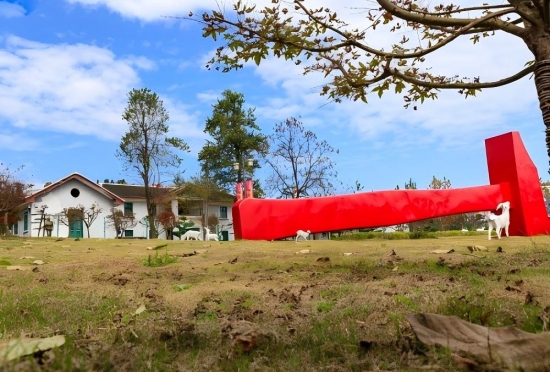
Zhusha Ancient Town is situated at the junction of Guizhou and Hunan provinces. Its predecessor was the Wanshan Mercury Mine, boasting over two millennia of mining history. This site once served as China's largest mercury industrial production base, holding the nation's top mercury reserves and output. It earned the prestigious titles of “China's
... [Open up]Zhusha Ancient Town is situated at the junction of Guizhou and Hunan provinces. Its predecessor was the Wanshan Mercury Mine, boasting over two millennia of mining history. This site once served as China's largest mercury industrial production base, holding the nation's top mercury reserves and output. It earned the prestigious titles of “China's Mercury Capital” and “Cinnabar Kingdom.” As resources dwindled, this dormant “mining capital” was not forgotten but reborn through ingenious transformation. Today, it has successfully evolved into a National 4A-rated Tourist Attraction and Industrial Tourism Demonstration Base. Its core site, the Wanshan Mercury Mine Ruins, is designated a National Key Cultural Relic Protection Unit—a model for resource-based city transformation.
The attraction's charm lies in its authentic, tangible immersive experience. Venture deep into the Yan Yingwo Mine Tunnel, dubbed the “Underground Great Wall,” where 970 kilometers of crisscrossing tunnels offer a cool 16°C respite and a profound sense of mining history. Above ground, be sure to stroll along “That Era” Street, which perfectly preserves the original appearance of a miners' residential area from the last century. Blue-tiled houses, vintage shop signs, and Phoenix brand bicycles instantly transport you back in time. Additionally, over 30 must-visit spots, including the Mercury Mine Industrial Heritage Museum and the Soviet Experts' Building, collectively present a panoramic view of a complete industrial civilization journey.
For visitors from afar, Cinnabar Ancient Town is more than just a scenic spot—it serves as a vivid window into China's industrialization journey and contemporary innovation. Through the “past and present” of a single mine, it tells a moving story of heritage, memory, and rebirth.